


Beyond the Nomad Bubble
Where Digital Nomads Meet Local Communities in Puerto Escondido, Mexico

Project Overview
I first surfed the waves at Puerto Escondido in the summer of 2025. This magical town quickly won over my heart with its powerful waves, beautiful sunset, and amazing and welcoming people. Years of surfing have taught me to respect local communities and to be mindful of the footprint I leave behind. Through conversations with local restaurant owners and surfers in the water, I began to sense growing frustration around the pace and direction of change in Puerto Escondido, revealing a gap between rapid growth and the systems meant to support it.
Since American surfers first “discovered” the world-famous surf break, Zicatela, in the 1970s, Puerto Escondido has evolved from a small fishing village in Oaxaca, Mexico into a global surf destination - one that was rapidly reshaped during COVID by the rise of remote working and the influx of digital nomads. This surge in transient populations has driven rising living costs, crowded public spaces, environmental strain, and a widening gap between the growth of the town and limited municipal infrastructure.
Through primary and secondary research, my project explores how facilitating sustainable interactions between digital nomads and the local communities through community led initiatives that address the challenges locals are experiencing may help protect the town’s social and ecological fabric. This research sets the foundation for my four design projects I will be completing in the next few months.
Sep - Nov, 2025
Primary Field Research,
User Interviews,
Participatory Workshops,
Secondary Research
User Interviews,
Participatory Workshops,
Secondary Research
Jan - Apr, 2026
Digital Product Design,
Physical Product Design,
Service Design,
Experience Design
Physical Product Design,
Service Design,
Experience Design
Digital Nomad Growth in Puerto Escondido
THE BACKGROUND
The rapid influx of digital nomads in Puerto Escondido post COVID, drawn by remote work flexibility, has increased the town’s transient population and reshaped its social, economic, and environmental dynamics.
Pre 1970s
Puerto Escondido was once a quiet fishing village located in Oaxaca state, Mexico.

1973: The Beginning of Surf Tourism
The “discovery” of waves are Zicatela by American surfers marks the beginning of surf tourism in Puerto Escondido.
Surf tourism is travel centered on accessing specific surf breaks, where waves operate as both ecological resources and cultural commons.
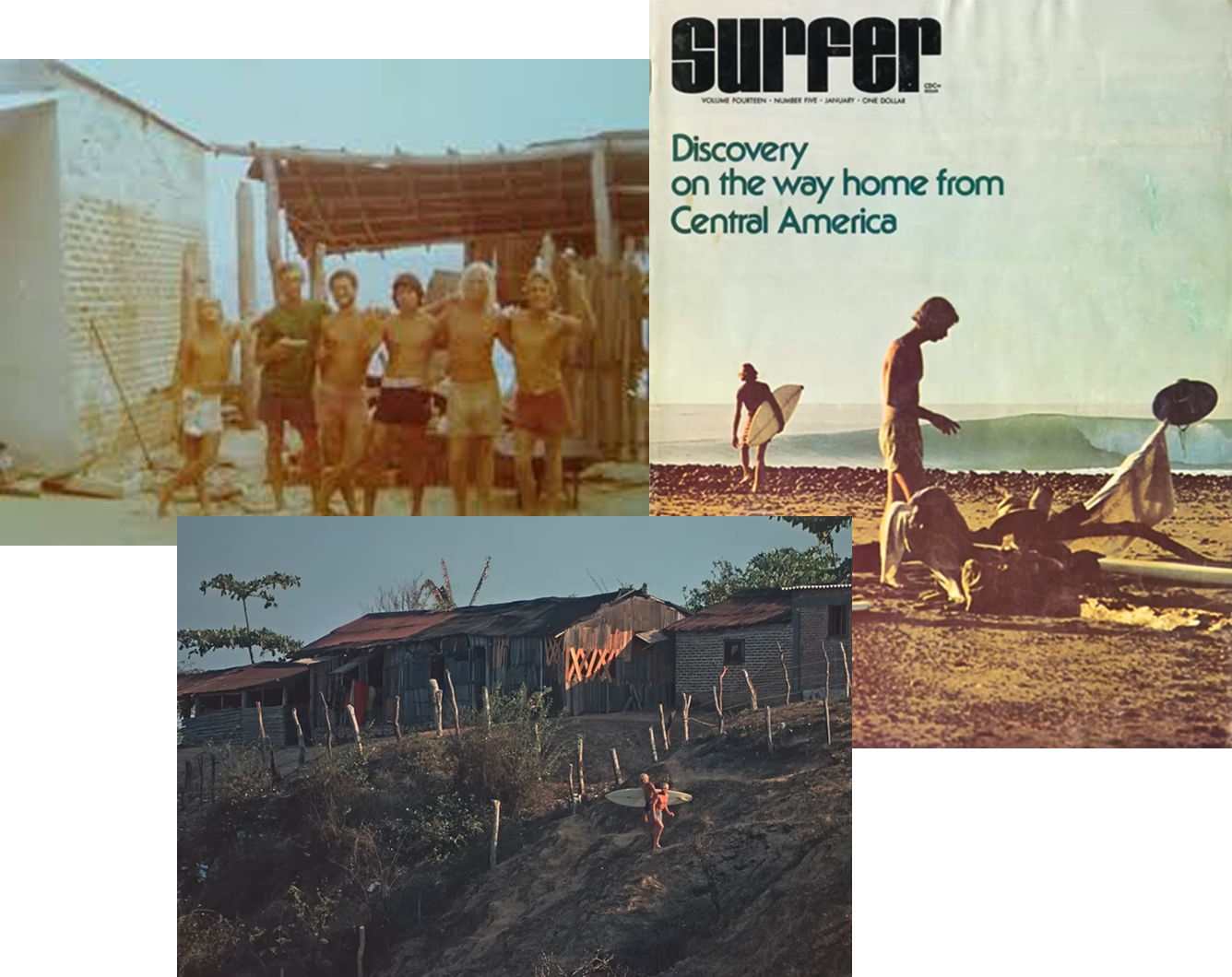
1973: The Beginning of Surf Tourism
The “discovery” of waves are Zicatela by American surfers marks the beginning of surf tourism in Puerto Escondido.
Surf tourism is travel centered on accessing specific surf breaks, where waves operate as both ecological resources and cultural commons.
2020 - Today: Digital Nomad Age
With the outbreak of COVID 19, Puerto Escondido became one of the most popular destinations for digital nomads
Digital nomads are professionals working solely in an online environment while leading a location independent and often travel reliant lifestyle where the boundaries between work, leisure and travel appear blurred.
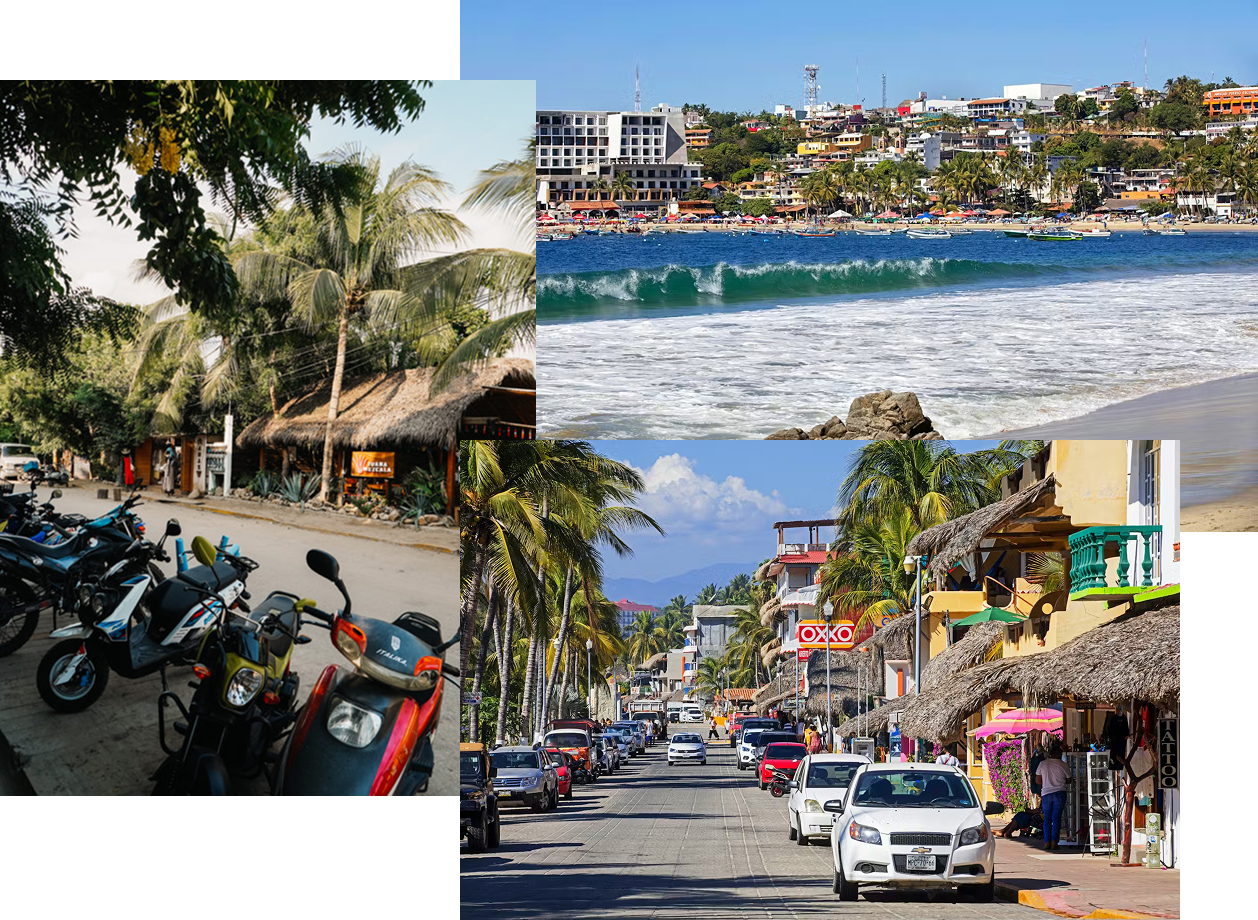
The growth of transient community leads to the significant increase of the population of Puerto Escondido.
Yr 2020: ~26,500 Residents
Yr 2025: ~47,000 Residents
Yr 2025: ~47,000 Residents

2020 - Today: Digital Nomad Age

New Mexican Resident
Yr 2018: ~342,500 Visitors
Yr 2025 (Jan - Oct): ~800,000 Visitors
Yr 2025 (Jan - Oct): ~800,000 Visitors

Short-Term Traveler

Digital Nomads
Capacity Overload
PROBLEM SPACE
Rapid tourism growth in Puerto Escondido has outpaced local infrastructure development: environmental degradation, water scarcity, waste mismanagement, and energy strain disproportionately affect local residents, revealing a gap between tourism growth and community capacity.
Growth Brings Consequences
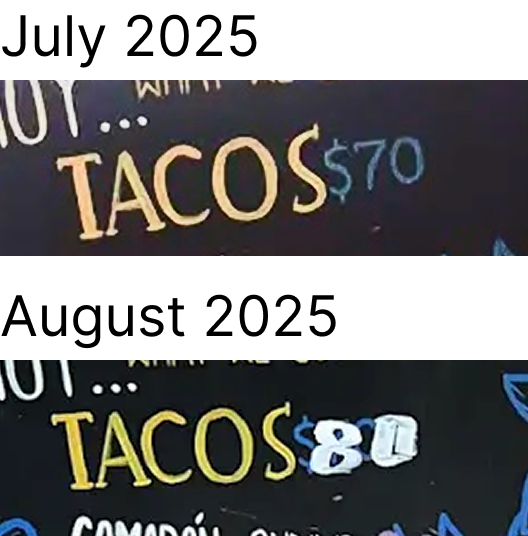
Rising Cost of Living
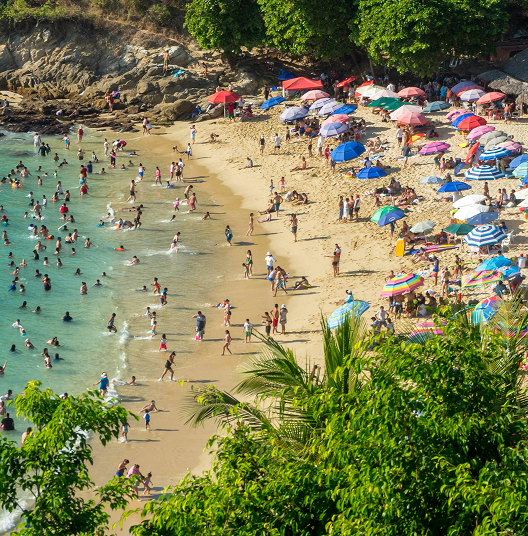
Crowd

Traffic

Non-stop Construction
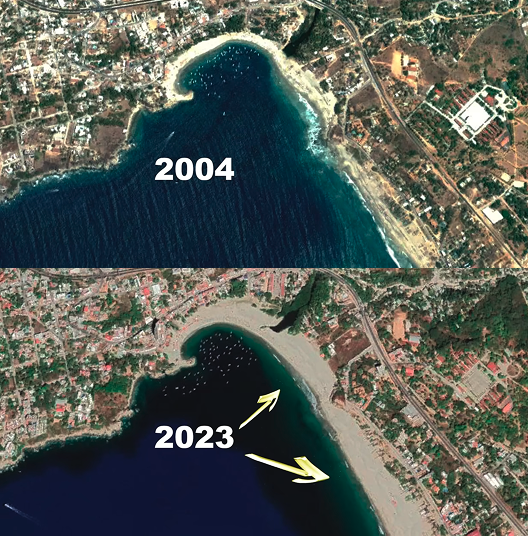
Dying Waves
The Bigger Issue
Population is expanding at a rate that far outstrips the capacity and pace of local basic infrastructure development.
As Coco Nogales, a local resident, said in Place of Thorns: "Maybe tourism isn’t the problem, but the town isn’t prepared to grow so fast. The infrastructure isn’t in place." Today, Puerto Escondido faces major challenges, including limited access to clean water, inefficient waste and recycling systems, inadequate sewage management, and increasing strain on energy infrastructure.
Major Shortages of Local Infrastructure

Clean Water

Trash & Recycling

Sewage

Electricity
Research Methods
To explore how design can address the challenges faced by local communities in Puerto Escondido, I conducted three months of research, including secondary research, interviews with subject matter experts, and two weeks of immersive field research with user interviews and participatory workshops.
Secondary Research (Selected books, film, and essays)
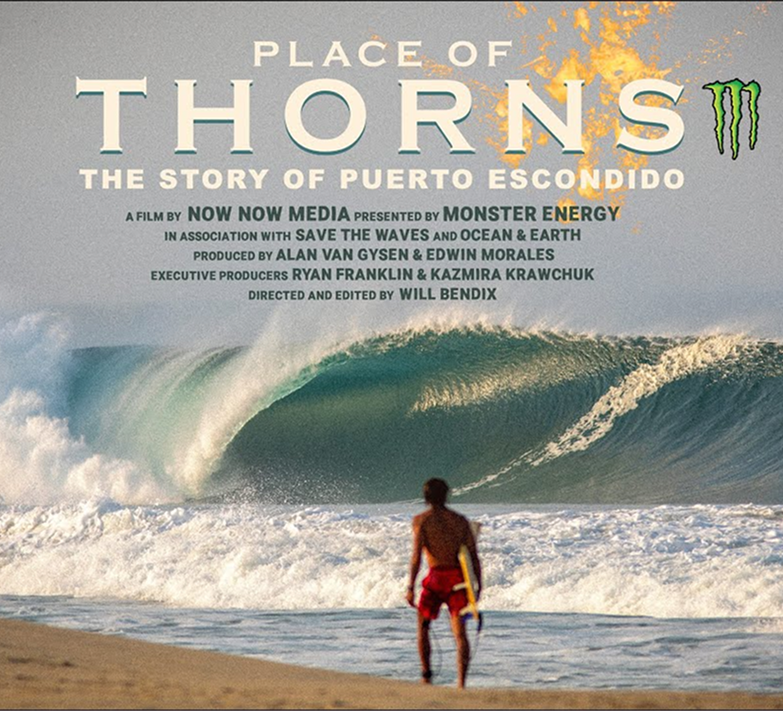
Place of Thorns | the Story of Puerto Escondido. Directed by Will Bendix, Film, Now Now Media, 2024.

Miocevic, Dario. “Baby Come Back: Resident-Digital Nomad Conflicts, Destination Identification, and Revisit Intention”.
Weiss, Joseph. Shaping the Future on Haida Gwaii. UBC Press, 2018.
Maccannell, Dean. The Tourist: A New Theory of the Leisure Class. University of California Press, 1999.
Subject Matter Expert Interviews

Joseph Weiss
Professor in Anthropology

Rob Rosenthal
Professor in Sociology
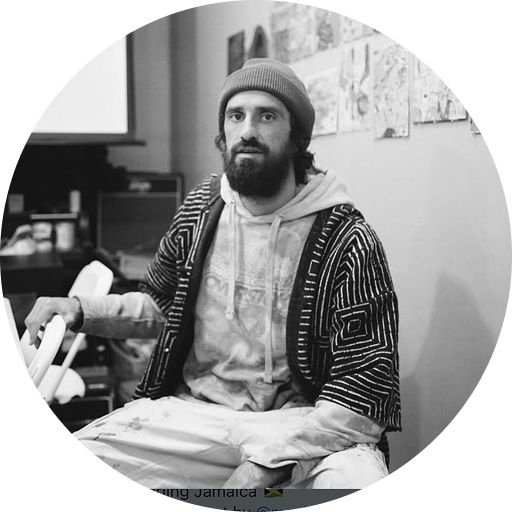
Alex Seel
Surfer, Artist, Community Organizer
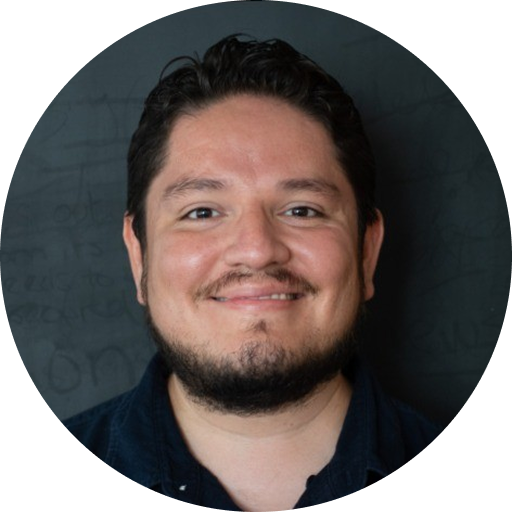
Héctor Ruiz Chaochato
Designer, Researcher in Public Policy

Roo Smith
Surfer, Filmmaker, Sustainability Activism Group Leader

Elena Rocchi
Professor of Architecture, Environmental Design

Joel Herold
Director of Technology at Resilient Housing Non-profit

Primary Field Research: Participatory Workshops & Interviews
Local Residents

Maria

Emma

Jose

Mateo

Valeria
Digital Nomads

Fred

Jesse

Leslie
Mike

Sierrita

Sofia

Trevor
Non-local Long-term Residents (people settled in PXM for the perceivable future)

Carlos

Derick

Jon
Foreign Business Owner

Robert
Community Care & Collective Action
COMMUNITY CULTURE
Despite infrastructure challenges, local communities in Puerto Escondido prioritize togetherness, care, and collective action. Traditions like tequio and grassroots initiatives reflect a strong culture of mobilizing residents to protect and shape the town’s future.
Participatory Workshops: “Day of Joy” & “Wishes of Puerto Escondido”
During my interviews with the local residents in Puerto, I run two workshops, “Day of Joy” and “Wishes of Puerto Escondido” to identify opportunity areas where digital nomads can give back in.
Participants were asked to reflect on their wishes for themselves, their parents, kids, best friend, their business, and their community/neighborhood.
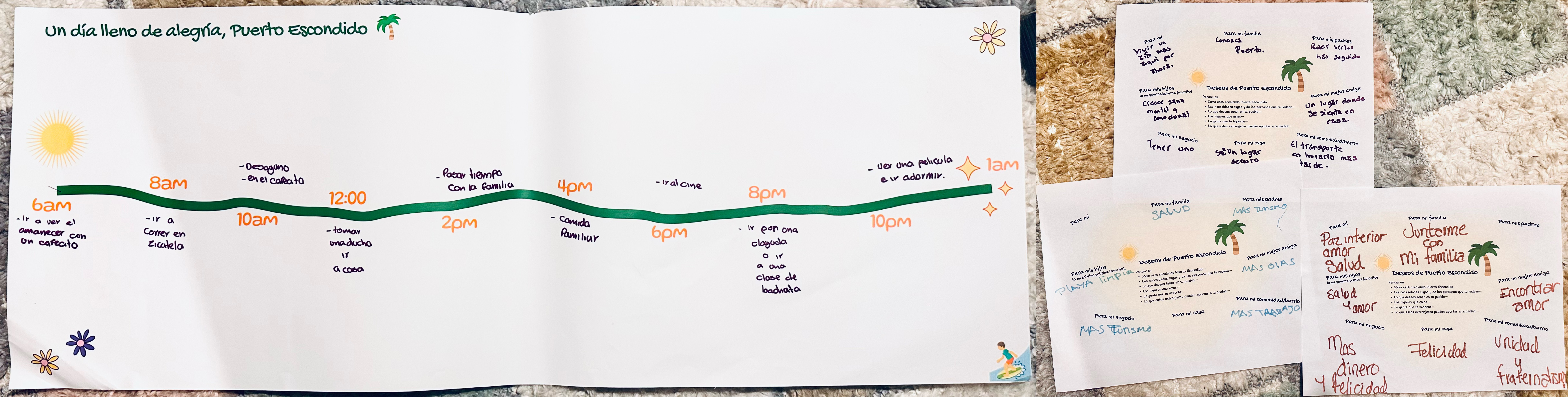
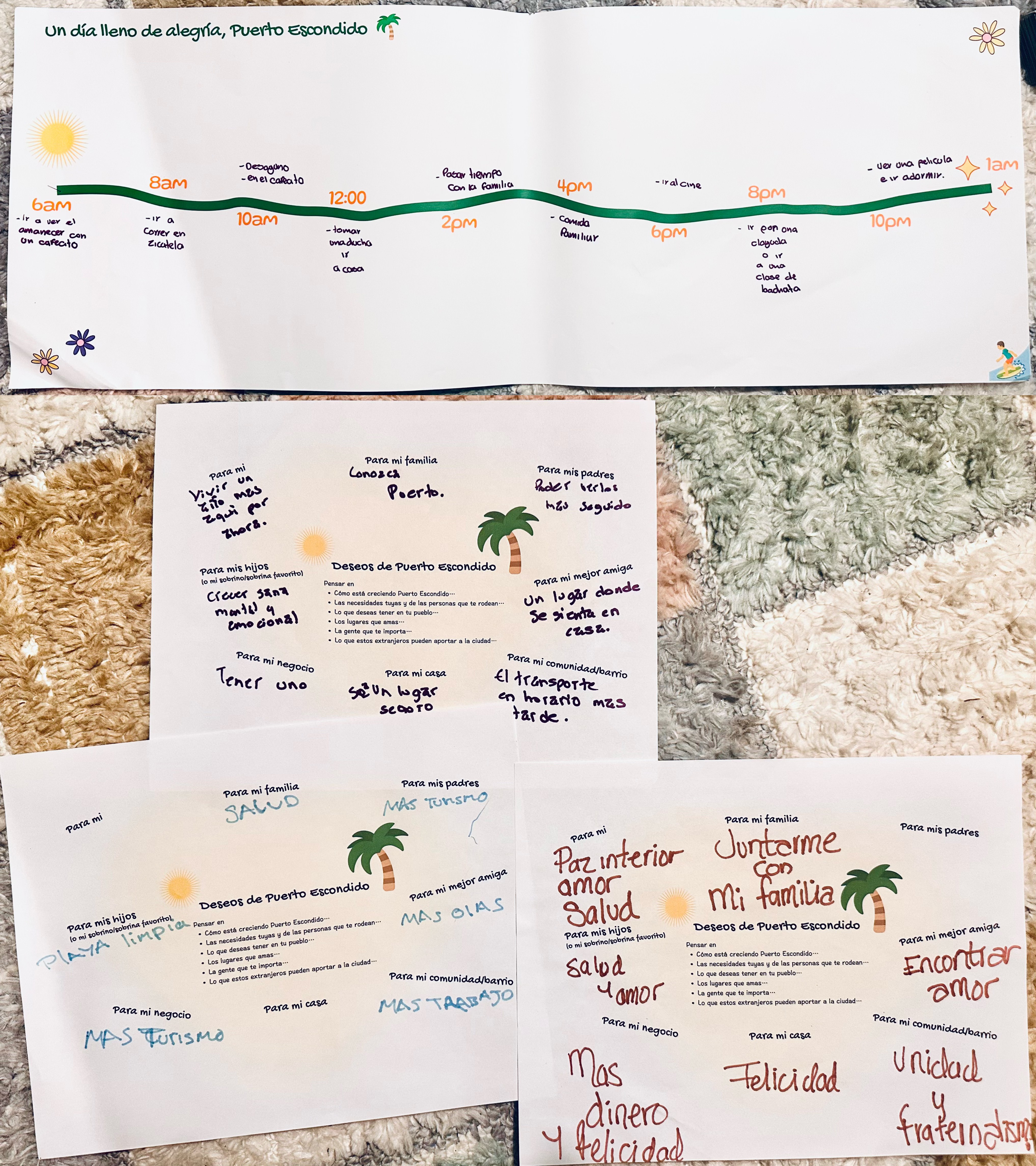
“Day of Joy” and “Wishes of Puerto Escondido” Workshop (click to enlarge)
I found that...

Despite the needs for better infrastructure, local resident’s wishes focus on together-time and creating joy, hope, and opportunities with family, friends, and community.
From Personal Care to Community Practice
In the digital nomad era, Puerto Escondido’s local culture continues to center on community care and collective responsibility, often expressed through community projects and activism. One longstanding tradition that embodies this spirit is tequio.
Tequio is a traditional form of mandatory, unpaid community labor in indigenous contexts (specifically within the region of Oaxaca) that functions as a social practice to strengthen communal bonds, manage territory, and carry out collective projects.
Local Efforts - Community Projects & Activism
This spirit of collective responsibility continues to shape how residents organize and care for their community today.

We locals organize changes and make rules to give respect to ourselves first, it makes Puerto more united.
Locals and non-local residents in Puerto are constantly fighting for changes that lead to a better future. This is reflected in the establishment of community rules and regulations, such as pedestrian road hours, kids surf Sunday, party hours, and surf school fees and teaching regulations. Many community activism projects also emerges:
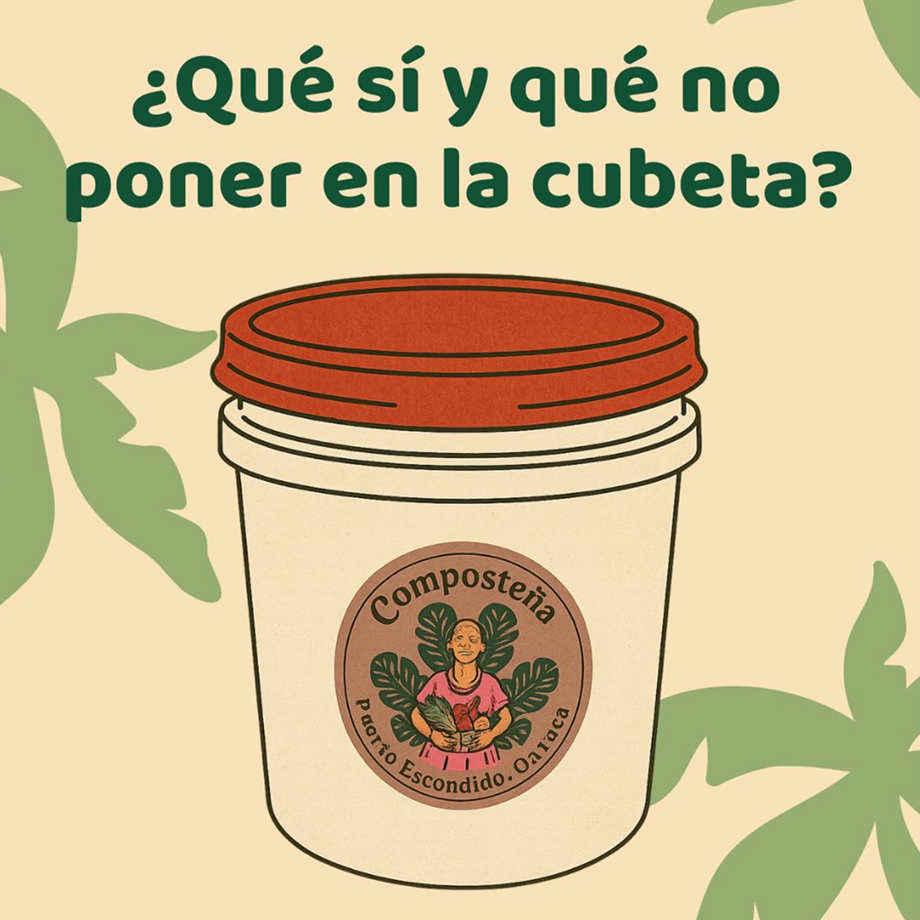
Compost Service

Recycling Events
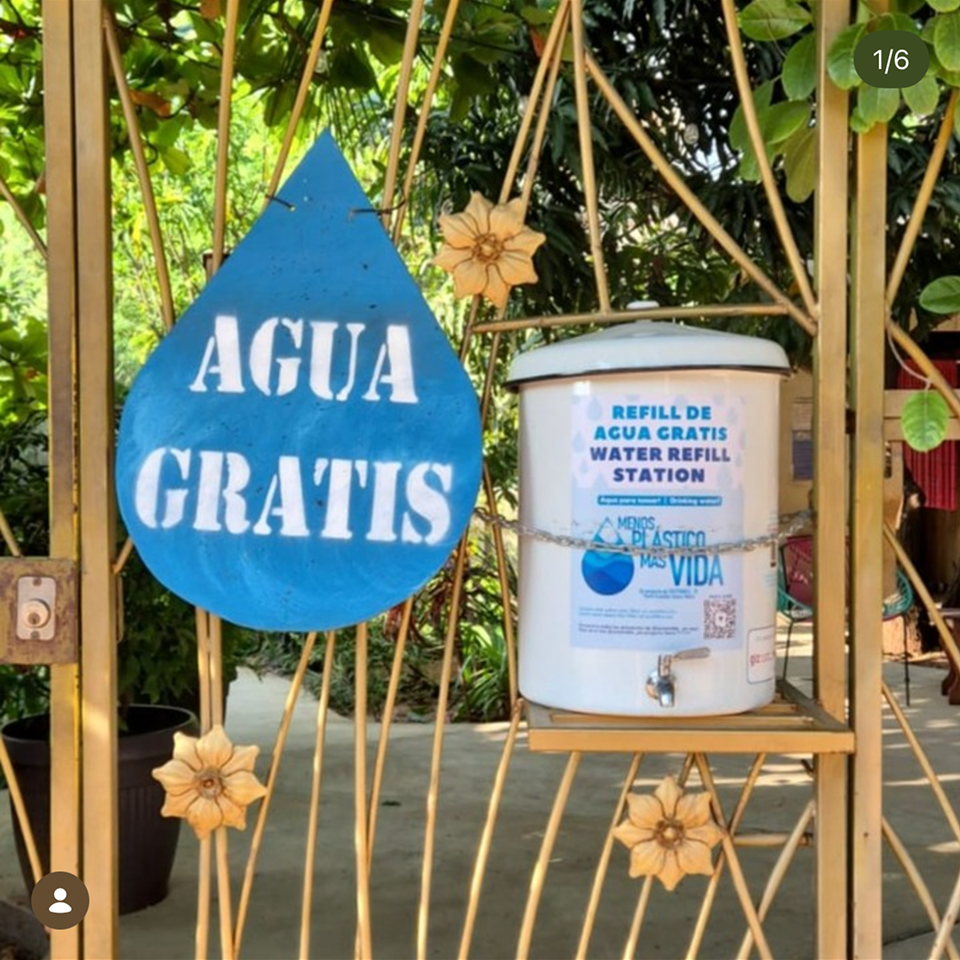
Free Clean Water Stations
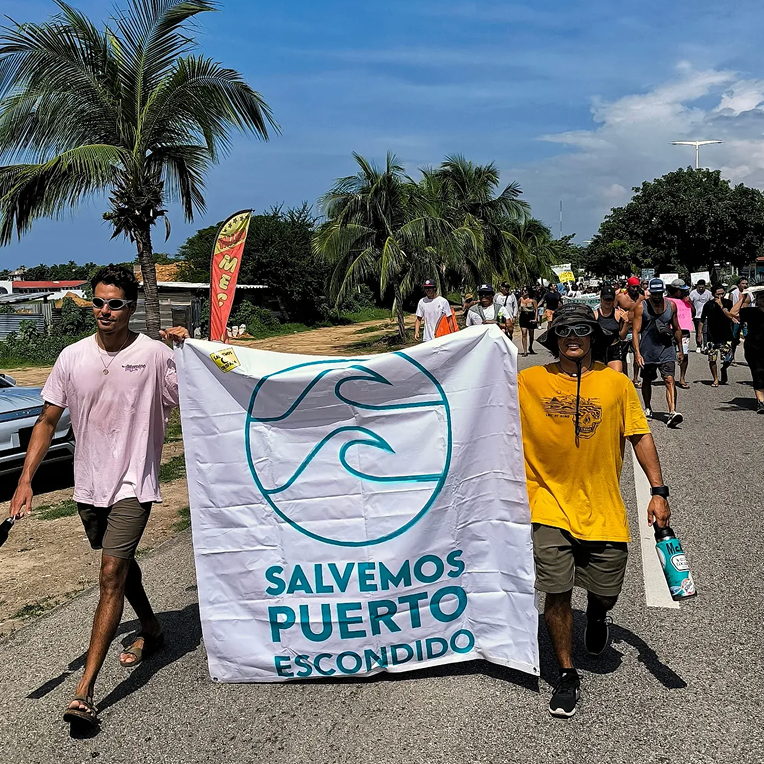
“Save the Wave” Project
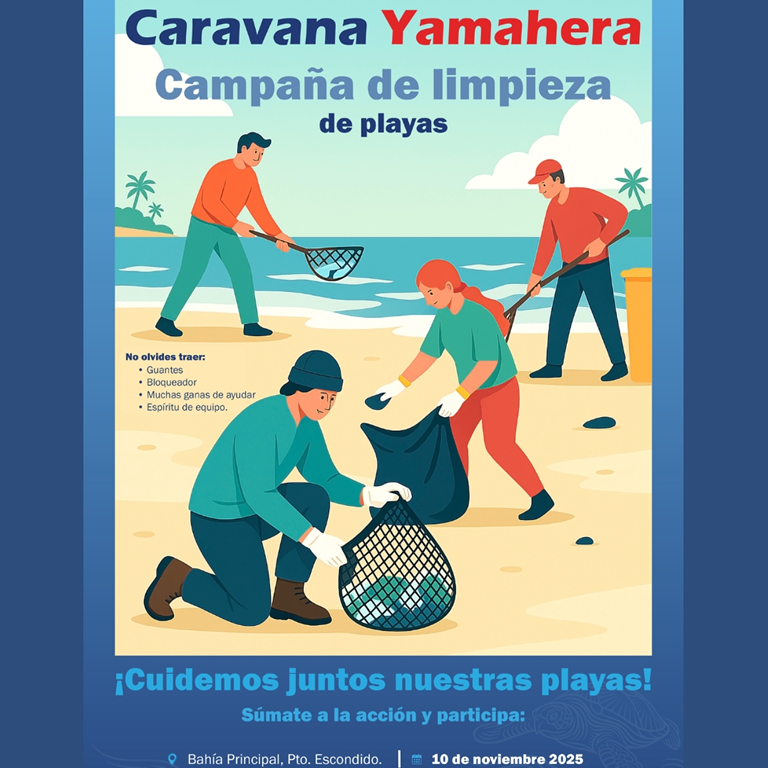
Beach Cleaning Events

Community Protests
In the surf film Place of Thorns (2024), local residents expressed the urge of participation from all groups living in the community: “Change and growth is inevitable. But what’s amazing is the community in the recent years has galvanized together to protect our home... Everyday we are fighting. We need the help of everyone.”
Digital Nomad Participation
THE PROBLEM
The lack of awareness about local challenges prevents digital nomads from engaging in community initiatives and becoming active contributors.
Participatory Workshops: “Beach Commons”
Participants
2 digital nomads
1 non-local long-term resident
1 non-local long-term resident

Fred
Derick
Sofia
Participants were asked to identify local challenges that they relate to and create initiatives ideas they could contribute to that address these challenges.
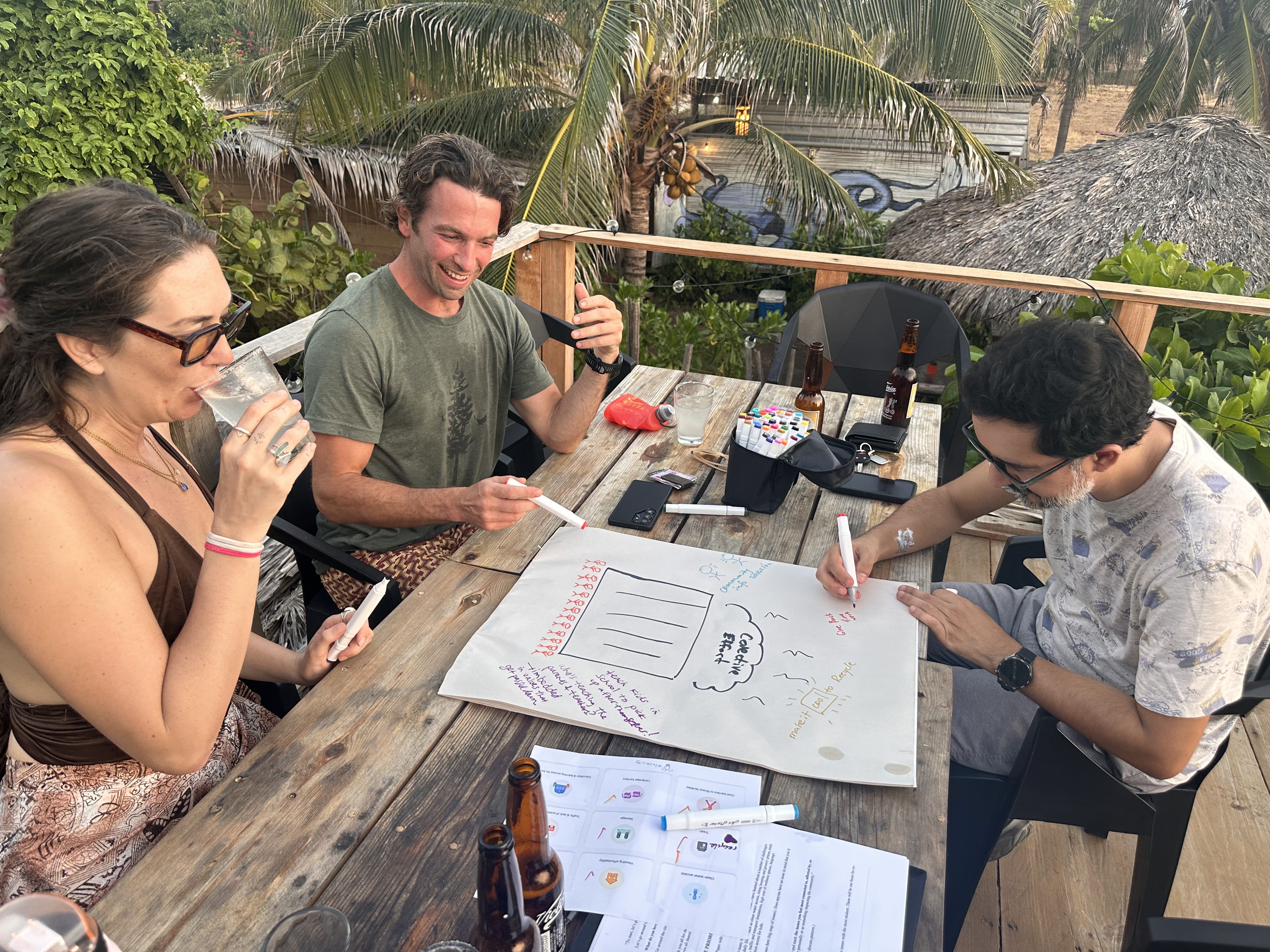

Participants Sketch Out Possible Initiatives They Can Contribute To
I found that...
When local challenges remain invisible to digital nomads, opportunities to engage in community activism remain inaccessible, and participation rarely begins.
Locals and digital nomads often share the same solutions, but without connective infrastructure, these ideas fail to become shared action.
The Gap In-Between
The Real Gap
Despite strong local grassroots initiatives, the community’s capacity for collective action is limited by geographic segregation, social bubbles, and language barriers, leaving few accessible pathways for newcomers to participate ethically.
Geographic Segregation
The growth of La Punta symbolizes the cultural division between local Puerto identity and the emerging "globalized enclave."
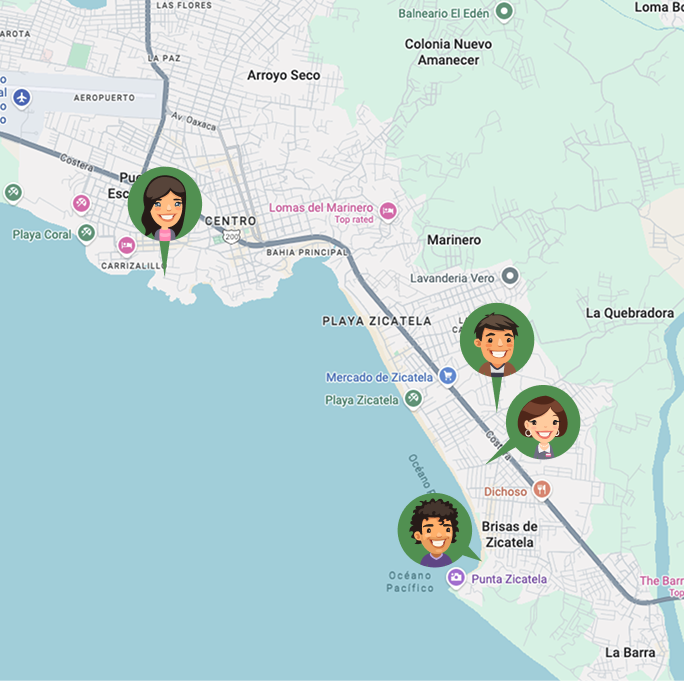
In my interviews, locals describe La Punta as it was 20 years ago: "no one lived there, the beach was covered with thorns." Nowadays, La Punta is filled with digital nomads and the health and fitness scene catered to them - pilates, yoga, rock climbing, boxing, jungle gyms, etc. Centro, on the other hand, as locals described, has started to see some signs of tourism, but mostly remains the same. The everyday things for basic living you don't find in La Punta are all here, from motor fix shops to phone shops, pet stores, and so on.
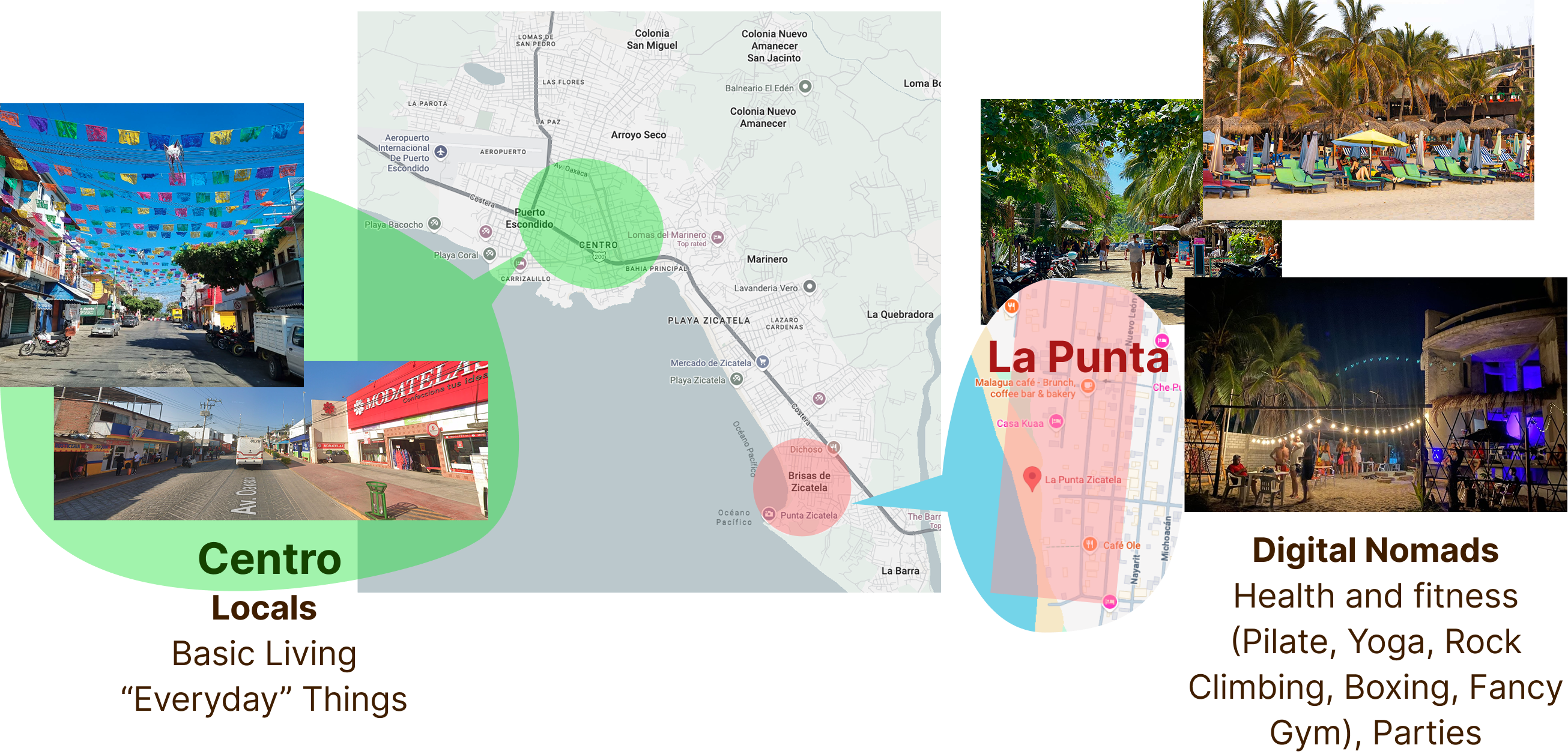
Social Segregation - The Interaction Bubble
La Punta is a bubble. It’s not Puerto. People who stay there live in a fantasy world, they are mostly foreigners (digital nomads) escaping from their country looking for a way of living (that's close to the beach, surfing, staying within their group of friends who don’t speak Spanish), that’s not Mexican experience.
The geographic separation of La Punta and Centro reinforces social, economic, and cultural bubbles.
Businesses in La Punta cater to digital nomads rather than locals. Locals can't afford the cost of living and activities in La Punta, while digital nomads can easily find the lifestyle they are looking for there. Thus, the bubble these groups are in limits the people they interact with and the types of inter-group interactions they participate in.
Language Barrier
From my travel experience, you can get by but really can’t connect unless you got the language.
It’s important for me to participate in the community but I find that challenging because of the language barrier.
The language barrier in Puerto Escondido functions not just as a communication gap but as a cultural and social boundary that signals respect, belonging, and intention. Without shared linguistic practices, locals and digital nomads remain in parallel worlds, reinforcing segregation and limiting opportunities for meaningful collaboration.
Merging Bubbles, Closing Gaps
THE DESIGN SPACE
My project explores how designing accessible and visible pathways for digital nomads to engage with local grassroots initiatives can transform them from passive beneficiaries into active contributors - strengthening community resilience, fostering more ethical and reciprocal relationships between digital nomads and local communities, and supporting more equitable futures in Puerto Escondido.
Changes happen when a mix of minds meet and initiate programs that address the local challenges.
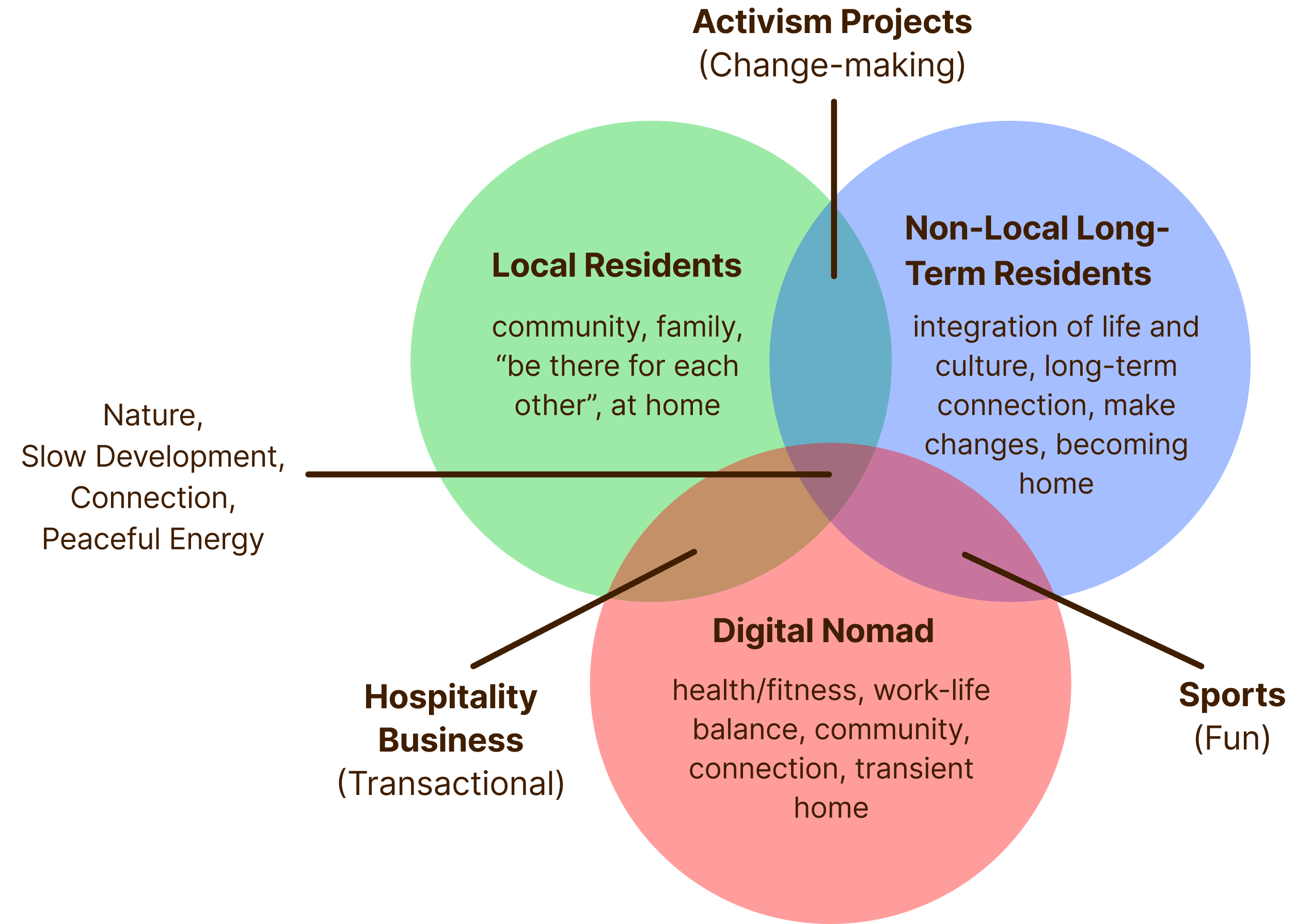
During my interview, Jon, a Mexican resident who moved to Puerto Escondido 5 years ago, talked about how he tried to start projects that create positive changes for a year but had failed until one day, someone in his volleyball group started the conversation. Four people with similar ideas immediately connected and contributed their skills and knowledge from their local or non-local business backgrounds. Jon's volleyball group consists of digital nomads, local residents, and non-local residents like him.
In Jon's experience, as the three social bubbles at Puerto Escondido start to merge, the shared love and hope turned into the sharing of culture, the care for community, the action for change, and a more sustainable future for Puerto.

How Might We...

Awareness
help new-coming digital nomads learn and understand the hidden infrastructural burdens and community challenges locals face upon arrival?

Entry Point
transform the ideology of tequio into a cultural practice for digital nomads to foster interest and create a low-stakes entry point during their stay in Puerto Escondido?

Access & Participation
connect existing local initiatives into a unified ecosystem that digital nomads can easily access and contribute to, strengthening social cohesion and community resilience during their stay?

Sustainable Future
bridge geographic, linguistic, and lifestyle divides so locals residents and digital nomads can co-create community-led initiatives as equals to support Puerto Escondido’s long-term well-being?
Designs in the Work
Following the research, I'm currently developing several design solutions spanning UX design, physical product design, service design, and experience design. Check out the videos below for my work in progress.
Experience Design: Cook Share, an orientation experience designed to transform the arrival of digital nomads from an act of consumption into contribution. By replacing traditional orientation and a quick “walk-through” of the co-living space with a cook share experience, the orientation makes the invisible infrastructures challenges and resource restraints of Puerto Escondido visible, fostering a culture of stewardship, reciprocity, and shared responsibility from a digital nomad's very first day/week.
UX Product: Aquí También, a mobile app that centralizes information about local grassroots initiatives in Puerto Escondido. The app offers digital nomads guided, relational access to local initiative events and the initiative communities by connecting them with a local participant prior to the event. (In progress)
Service Design: Cook Share, transitioned from the experience design, is a service that creates structured, facilitated cooking sessions for co-living space residents and local initiative organizers. It uses the ritual of food and shared manual labor to turn the invisible local restraints into visible actions, allowing conversations to naturally shift toward mutual learnings and idea exchange, fostering a culture of stewardship, reciprocity, and shared responsibility. (In progress)
Physical Product: Taza de Hito, designed for local taco shops counters to turn the familiar "would you like to donate your change" moment into an experience and ritual of community belonging. (Coming soon)
See More Design Projects

Mother mAI
Research & Design | Online Dating
AI for Reducing Psychological Aggression Against Women


WeLight
Startup MVP Design | Education
Empowering Students through AI to Navigate Higher Education Applications with Confidence

The Foldable Gallery
Interactive Experience Design | Furniture
Public Seating Design for Collective Art Viewing and Social Interaction

